A windowsill or balcony
Pots and salad.
Cut-and-come-again salad, herbs, a tumbling tomato and a pot of mint. Use peat-free compost and pots with drainage holes.
Chamber · Growing
Grow food, grow soil, grow neighbours. Practical, UK-focused growing for a windowsill, a raised bed or a smallholding.
Eco over ego: feed the soil, leave room for wildlife, and share what you grow.
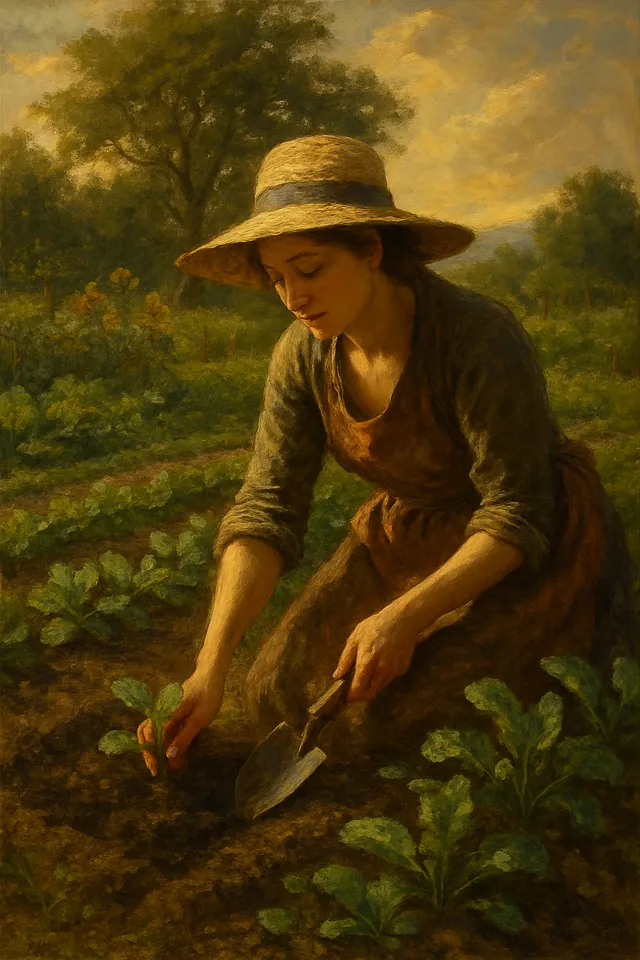
Start where you are
A few crops grown well teach more than a big plot that runs away from you. Start with the space you can keep up with this year.
A windowsill or balcony
Cut-and-come-again salad, herbs, a tumbling tomato and a pot of mint. Use peat-free compost and pots with drainage holes.
A garden bed
About 1.2 m wide so you can reach the middle without treading on the soil. Fill it with compost over cardboard and plant straight into it.
A smallholding
Four beds in rotation, fruit along the edges, a compost system, water butts and somewhere cool and dark to store the harvest.
Soil first
No-dig. Instead of digging, spread a few centimetres of compost on the surface each year. Worms and fungi do the mixing, the soil structure stays intact and fewer weed seeds are brought up. The approach was popularised in the UK by grower Charles Dowding and is described by the RHS.
Compost. Mix roughly equal amounts of greens (vegetable peelings, grass clippings, young weeds) and browns (cardboard, straw, dry leaves). Keep it as damp as a wrung-out sponge and turn it if you want it faster. Leave out cooked food, meat and dairy, which attract rats.
Leaf mould. Pack autumn leaves into a wire cage or a bag with holes. In one to two years they become a fine, free mulch.
Manure. Use it well rotted, never fresh, because fresh manure can scorch plants. Ask where it came from: some weedkillers used on pasture pass through animals and can damage beans, tomatoes and potatoes.
The Mycelial Network explains the fungal threads that carry water and nutrients through healthy garden soil.
The growing year
Timings suit most of lowland England and Wales. In Scotland, the north and on high ground, start two to three weeks later and check your local last-frost date.
Winter · Dec to Feb
Spring · Mar to May
Summer · Jun to Aug
Autumn · Sep to Nov
Smallholder rotation
Growing the same family in the same place builds up pests and diseases such as clubroot and potato cyst eelworm. A simple four-bed rotation moves each group one bed along each year:
Courgettes, squash, salad and sweetcorn can fit in wherever there is room.
Fifteen crops to start with
Each card gives a typical UK sowing and harvest window, one practical tip and one honest caution.
Solanum tuberosum
Earth up shoots as they grow and cover them if frost threatens. Lift maincrop on a dry day and store in hessian or paper sacks somewhere dark and frost-free.
Caution: Green tubers, shoots, leaves and the small tomato-like berries contain glycoalkaloids. Do not eat green parts, and keep berries away from children.
Allium cepa, Allium sativum
Plant sets with the tip just showing. Lift when the leaves yellow and flop, then dry them in the sun or a shed before storing.
Caution: Onions and garlic are toxic to dogs and cats, so keep scraps and stored bulbs out of their reach.
Vicia faba
Pinch out the tips once the first pods set; it reduces blackfly. Leave the roots in the ground after harvest to return nitrogen to the soil.
Caution: People with G6PD deficiency can react seriously to broad beans (favism).
Phaseolus coccineus
Give them tall, firm supports and dig compost into the trench. Pick often: the more you pick, the more they crop.
Caution: Raw beans contain lectins that cause stomach upset. Always cook them thoroughly.
Pisum sativum
Twiggy hazel or birch sticks make free supports. Net against pigeons and mice when sowing.
Caution: Ornamental sweet pea seeds and pods are toxic. Keep them apart from edible peas.
Brassica oleracea
The hardiest winter green. Firm the soil well, net against pigeons and cabbage white butterflies, and pick lower leaves first.
Caution: Brassicas share clubroot and pests, so move them to a new bed each year.
Allium porrum
Drop seedlings into deep dibber holes and fill them with water, not soil, to blanch the stems.
Caution: Leek moth and allium leaf miner can be serious in some areas. Fine mesh is the non-chemical answer.
Beta vulgaris
Each knobbly seed is a cluster, so thin seedlings to one per spot. The young leaves are good in salads.
Caution: Red urine or stools after eating beetroot is harmless and common.
Daucus carota
Carrot fly flies low: a barrier of fine mesh about 60 cm high around the bed helps. Thin on still evenings to avoid releasing scent.
Caution: Wild relatives in the carrot family include deadly hemlock. Never forage carrot-family plants unless you are expert.
Cucurbita pepo
Two plants feed a household. Pick fruit at 10 to 15 cm, water at the base and mulch well.
Caution: Do not eat a courgette or squash that tastes very bitter. It can contain high levels of cucurbitacins, which cause severe stomach upset.
Solanum lycopersicum
Feed weekly with a high-potassium feed once fruit sets. Water regularly to avoid split fruit and blossom end rot. Outdoor plants are vulnerable to blight in warm, wet summers.
Caution: Leaves and stems are mildly toxic and can irritate skin. Wash your hands after pinching out side shoots.
Lactuca sativa and others
Cut-and-come-again leaves regrow several times. Lettuce struggles to germinate in hot weather, so sow summer batches in shade.
Caution: Wash soil off leaves before eating, especially where animals or manure have been.
Rheum × hybridum
Stop picking by the end of July so the plant can recover. A thick mulch of well-rotted manure in winter keeps it strong for years.
Caution: Rhubarb leaves contain oxalic acid and are poisonous. Eat only the stems.
Rubus idaeus
Cut summer canes that have fruited to the ground after harvest. Cut all autumn canes down in late winter.
Caution: Choose certified virus-free canes rather than old suckers from a neighbour's patch.
Malus domestica
Most apples need a pollination partner nearby. Choose a rootstock to suit your space, and prune in winter.
Caution: Windfalls attract wasps. Pick them up regularly, especially where children play.
Golden Thread · The apothecary herb bed
These herbs grow well in UK gardens. Each name opens its Medicine Cupboard entry, where traditional use, evidence and safety are kept apart. Growing a plant is not a reason to take it as a medicine, and nothing here replaces prescribed treatment.
Biodiversity
Nesting birds and their nests are protected by law. The main breeding season runs from March to August, so check hedges carefully before you cut.
Smallholding notes
Water. Fit water butts to every roof you can. Mulch keeps moisture in, and watering deeply once or twice a week beats a daily sprinkle.
Hens. In England and Wales the law requires you to register poultry with the government within one month of keeping them, and that includes small backyard flocks. Scotland runs its own register. Keep hens off seedlings, but let them clear finished beds and add their bedding to the compost.
Saving seed. Open-pollinated varieties of beans, peas, tomatoes and lettuce can be saved year to year. F1 hybrids do not come true from seed.
If you can help, help. Gluts happen. Ask your local food bank or community fridge whether they can take fresh produce, swap seedlings with neighbours, and pass on spare seed.
Plants to know
This is not a reason to fear gardens. It is a reason to know them, especially with children, pets, horses or livestock nearby.
The cinnabar moth that feeds on ragwort is named after the red mineral cinnabar in the Crystal Cave.
Sources